

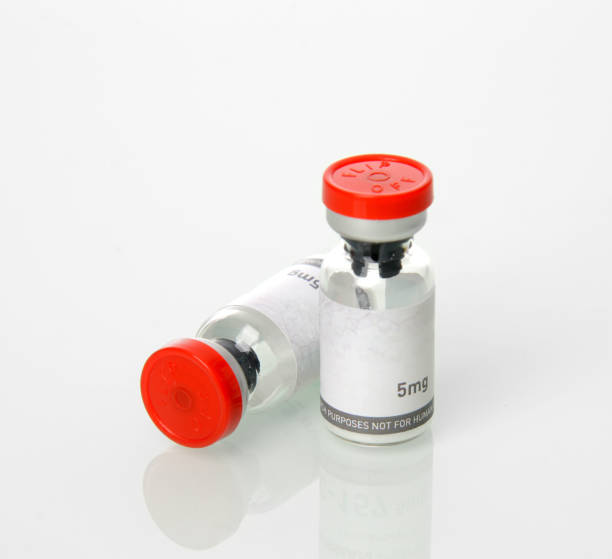
Quick Answer: The best peptide source for research purposes is one that provides third-party HPLC purity verification, mass spectrometry confirmation, documented manufacturing processes, reliable cold-chain shipping, and consistent batch availability. Purity, documentation, and supply reliability are the three criteria that most directly determine research validity. Price should be evaluated only after these standards are met.
There is a real problem in the research peptide market and most researchers encounter it eventually. Two vials of the same compound from different suppliers produce different results in the same assay. One is effective, one is not. Both claim 99% purity on their product pages.
The difference is almost always documentation, manufacturing quality, or both. Claiming purity and proving purity are not the same thing, and distinguishing between them before placing an order is a skill that saves research time and money at every stage of a project.
This guide covers what the best peptide source criteria actually look like in practice, what a legitimate peptide pharmacy provides versus what a low-quality supplier typically omits, and how to evaluate documentation before you commit to a source.
Why Peptide Purity Matters More Than Price
The biology of peptide research is unforgiving about impurity. Contaminants in a peptide preparation can include truncated sequences, deletion fragments, oxidation byproducts, reagent residues from synthesis, and residual solvents. At concentrations above 1 to 2%, these contaminants can produce biological effects in cell culture or animal models that have nothing to do with the target peptide.
This creates a specific research validity problem: a contaminated sample may appear to produce stronger effects than a pure sample if a contaminant happens to activate a related pathway. Conversely, certain contaminants antagonize receptors and suppress apparent activity. Either way, the result does not reflect what the peptide itself does.
For anyone conducting experiments where results will be published, compared to literature values, or used to inform downstream work, there is no responsible threshold below 98% HPLC-verified purity. For sensitive assays or dose-response studies, 99%+ is the appropriate standard.
What Documentation a Legitimate Peptide Supplier Provides
The documentation package accompanying a research peptide is the most reliable indicator of supplier quality. Here is what to look for and what each document confirms.
HPLC Certificate of Analysis (CoA)
What it shows: The relative purity percentage of the main compound peak versus all other peaks detected in the chromatogram. A legitimate CoA shows the actual chromatogram trace, the retention time, and the percentage area of each peak, not just a stated purity number.
What to look for: A clearly labeled main peak above 98%, minimal secondary peaks, and a run date. Be skeptical of CoAs that show a purity figure without accompanying chromatogram data, that number can be invented.
Mass Spectrometry (MS) Data
What it shows: The molecular weight of the compound, which confirms the amino acid sequence is correct. HPLC can show that something is highly pure but cannot confirm it is the right compound. MS fills that gap.
What to look for: The observed molecular weight should match the theoretical molecular weight of the peptide within normal instrument tolerance (typically within 1 Da for small peptides, within 5 to 10 Da for larger ones like semaglutide or tirzepatide). If the mass does not match, the sequence is wrong.
Third-Party Testing vs. In-House Testing
In-house testing means the supplier ran the analysis in their own laboratory on their own equipment. This is not inherently fraudulent, but it creates a conflict of interest. Third-party testing, conducted by an independent analytical laboratory with no financial stake in the result, is the higher standard.
The best peptide source for serious research uses independent laboratory testing and makes those reports available with each batch. Some suppliers provide batch-specific CoAs that change with each production run; others provide static documents that may not reflect current inventory. Batch-specific documentation is more reliable.
Manufacturing Quality: What Happens Before the CoA
The CoA shows you what the compound is at the point of testing. It does not show you how it was made. Manufacturing quality determines whether the final product is consistently pure, consistently stable, and appropriate for research use.
Solid-phase peptide synthesis (SPPS) is the standard manufacturing method for research peptides. When conducted properly with high-quality resins, coupling reagents, and purification steps, it can produce peptides above 99% purity reliably. Shortcuts in any stage, lower-quality reagents, inadequate HPLC purification, or insufficient quality control cycles, show up as increased impurity profiles.
GMP (Good Manufacturing Practice) compliance is the regulatory standard for pharmaceutical-grade production. Not all research peptide suppliers operate under GMP, and GMP compliance is not legally required for research compounds. However, suppliers who apply GMP principles to their synthesis and quality control processes produce more consistent results than those who do not.
Temperature control during storage is also a manufacturing quality indicator. Peptides degrade through hydrolysis and oxidation. Proper storage at -20 to -80 degrees Celsius from synthesis through dispatch preserves activity. Suppliers who store peptides at room temperature or in standard refrigerators are compromising the integrity of the product before it ships.
Shipping and Supply Chain: Why This Affects Research Validity
A peptide that is properly synthesized and verified can still arrive in degraded condition if shipping handling is poor. Freeze-thaw cycles, heat exposure during transit, and prolonged shipping times all degrade peptide stability.
What legitimate peptide pharmacy operations do:
Ship lyophilized (freeze-dried) powder rather than solution form wherever possible. Lyophilized peptides are significantly more stable during transit than reconstituted solutions.
Use cold packs or dry ice for temperature-sensitive compounds, particularly those with fatty acid modifications like semaglutide or tirzepatide.
Provide tracking and dispatch confirmation so researchers can plan reconstitution timing around arrival rather than storing received peptides improperly.
Same-day dispatch policies matter in research contexts where multiple research groups or experimental timelines need to stay synchronized.
NEXA Peptides has operated with same-day dispatch for orders placed before 3 pm on business days since establishing the service in 2012. The NEXA peptide pharmacy ships via DHL Express, USPS, and FedEx to over 80,000 clients across international destinations, with tracking updates via email and SMS throughout transit.
Evaluating a Peptide Source: A Practical Checklist
Before ordering from any new supplier, run through these questions:
Can I access batch-specific CoA documentation before purchasing? If no CoA is available or the supplier declines to provide one, stop here.
Does the CoA include the actual HPLC chromatogram trace or only a stated purity percentage? A number without supporting data is unverifiable.
Is mass spectrometry data available to confirm the molecular identity? For complex peptides with post-translational modifications or fatty acid conjugations, MS is non-negotiable.
Is the testing conducted by an independent third-party laboratory? Check whether the laboratory name is identifiable and searchable.
How does the supplier store peptides before shipping? Temperature-controlled freezer storage from synthesis to dispatch is the standard.
What is the shipping method and is cold-chain handling available? Ask directly for temperature-sensitive compounds.
How long has the supplier operated and what is the verifiable track record? Longevity in the research peptide market is a proxy for consistent quality. Suppliers who produce low-quality products do not retain 80,000+ clients across 14 years of operation.
What NEXA Peptides Offers as a Verified Source
NEXA Peptides was established in 2012 and has since served over 80,000 clients including research organizations, universities, and individual researchers. Every compound in the NEXA catalog is manufactured to 99%+ purity and ships with HPLC and mass spectrometry verification.
The product catalog covers over 60 peptides including growth hormone secretagogues, GLP-1 agonists, tissue repair peptides, tanning peptides, and custom blends. The NEXA peptide store operates same-day dispatch, international shipping via DHL Express and FedEx, and full track-and-trace on all orders.
For researchers who have experienced variability in results when sourcing from multiple suppliers, switching to a verified source with consistent batch documentation typically resolves those discrepancies. The research should produce variable results because of the biology, not because of the compound.
Frequently Asked Questions
Q: What is the best peptide source for research purposes?
The best peptide source is one that provides batch-specific third-party HPLC and mass spectrometry documentation, stores compounds in temperature-controlled conditions, ships via reliable carriers with appropriate cold-chain handling, and has a verifiable track record. Purity documentation is the minimum non-negotiable standard.
Q: What is a peptide pharmacy and how is it different from a regular supplier?
A peptide pharmacy in the research context refers to a supplier that applies pharmaceutical-grade standards to synthesis quality, purity testing, storage, and documentation. The term distinguishes high-quality, documented sources from commodity suppliers who provide limited quality verification. Research peptide pharmacies are not retail drug dispensaries.
Q: How do I verify a peptide’s purity before using it in research?
Request the batch-specific HPLC CoA and MS report before purchase. Check that the chromatogram shows a main peak above 98%, that the molecular weight matches the expected value, and that the testing laboratory is identifiable as a third party. Some researchers also perform in-house LC-MS verification on received samples.
Q: Is it safe to buy peptides from overseas suppliers?
The safety consideration for research purposes is not geographic but documentary. A supplier in any country who provides verified third-party HPLC and MS documentation is more reliable than a domestic supplier who provides only stated purity. Customs and importation rules vary by jurisdiction; researchers should verify local regulations for research compound importation.
Q: Why do different suppliers produce different experimental results with the same peptide?
Purity differences, sequence errors, contaminant profiles, and degradation from improper storage or shipping are the most common causes. Even a 3 to 5% difference in purity across suppliers can produce inconsistent results in sensitive biological assays. Batch-specific documentation allows researchers to trace result variability back to specific lots.