

Quick Answer
A first aider course trains participants to provide immediate emergency care before medical professionals arrive. In Singapore, certified courses cover CPR, AED operation, wound management, fracture response, choking, and burn treatment. Completing an accredited course qualifies you as an appointed first aider under the Workplace Safety and Health (First Aid) Regulations.
There’s a specific moment that most certified first aiders describe the same way. It’s not the classroom. It’s the first time they use the training outside of it, when someone collapses in the office, or a child chokes at a family event, and the muscle memory from course practice kicks in before the fear does.
That’s the outcome a real first aider course is supposed to produce: not just a certificate to frame on a wall, but a genuine capability to act under pressure. Whether that happens depends heavily on what the course actually covers, and how the practical components are delivered.
A quality first aider course builds both dimensions: the clinical knowledge to assess a situation correctly, and the physical skill to intervene competently. Here’s what that looks like in practice.
Core Skills Covered in Accredited First Aider Training
Emergency Assessment and Scene Management
Before any intervention, a first aider must establish that the scene is safe, identify the mechanism of injury, and conduct a primary survey. This is the assess-before-act principle, and it’s the difference between someone who helps and someone who becomes a second casualty.
The DRABC framework, standing for Danger, Response, Airway, Breathing, Circulation, is the standard entry point for all emergency assessments taught in Singapore-accredited courses. Trainers run participants through this sequence repeatedly until it becomes instinctive.
CPR and AED Operation
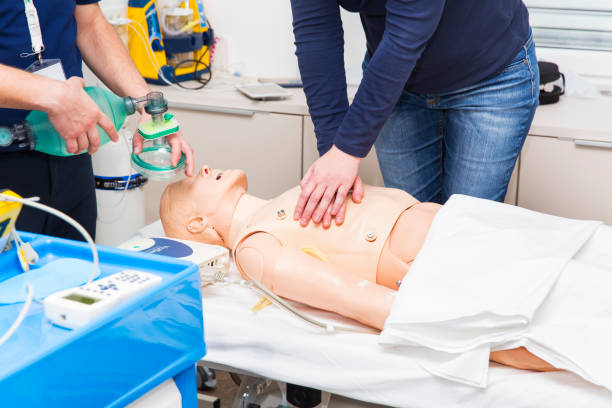
Cardiopulmonary resuscitation is the highest-stakes skill in the programme. Two minutes of continuous chest compressions at 100 to 120 per minute, at a depth of 5 to 6 centimetres, is physically demanding. Training manikins with real-time feedback indicators show whether the rate and depth are correct, which accelerates skill development far more than a demonstration alone.
AED operation is paired with CPR because the two work in sequence. Modern AEDs deliver clear audio instructions, but locating the device, applying the pads correctly, and maintaining CPR during charging requires practice. Safety course components at this level ensure participants are comfortable with both.
What Happens During the Assessment
Theory Component
Written or digital assessments test knowledge of injury classification, emergency protocols, and correct first aid procedures. Scoring thresholds are set high because the stakes in a real emergency are high. An 80 percent pass mark is standard for MOM-aligned courses.
Practical Sign-Off
The practical assessment isn’t a tick-box exercise. Assessors watch compression technique, bandaging accuracy, patient positioning, and whether the candidate communicates clearly with a simulated bystander. Candidates who don’t meet the standard get additional attempts, with focused feedback between each.
Which Situations This Prepares You For
Heart attacks, strokes, and cardiac arrest are the headline scenarios, but the training covers a broader range: severe bleeding, suspected spinal injury, burns from chemicals or heat, seizures, anaphylactic reactions, and diabetic emergencies. In a workplace setting, all of these can occur.
Here’s the thing most people miss: choking management for adults is a distinct skill set. The Heimlich manoeuvre, back blows, and progression to unconscious casualty protocols are all covered explicitly, because choking is one of the most common first aid scenarios in both workplace and social settings.
How Long the Qualification Lasts
First aider certifications in Singapore are typically valid for two to three years depending on the course level. Maintaining certification means completing a refresher or recertification course before the expiry date. Lapsing makes you non-compliant if your role requires a valid appointment.
Frequently Asked Questions
What is a first aider course?
A first aider course is an accredited training programme that certifies participants to provide immediate emergency care, including CPR, AED use, and wound management, before professional medical help arrives.
How long does a first aider course take?
Course duration ranges from half a day for basic CPR+AED to three days for full Occupational First Aid. CERT First Aid and Standard First Aid courses typically run one to two days.
What is the difference between a first aider course and a standard safety course in Singapore?
A safety course in Singapore covers a broader range of workplace risk topics, while a first aider course focuses specifically on clinical emergency response skills, assessment protocols, and hands-on intervention techniques.
Who should complete a first aider course?
Appointed workplace first aiders, teachers, coaches, parents, and anyone who wants to respond effectively to medical emergencies. Some roles in Singapore require a current first aider certification by law.
How do I choose a provider for a first aider course?
Look for SRFAC accreditation, verified trainer credentials, high-quality training manikins, and a clear assessment process. Reading participant reviews of specific instructors also helps you gauge the practical quality.