

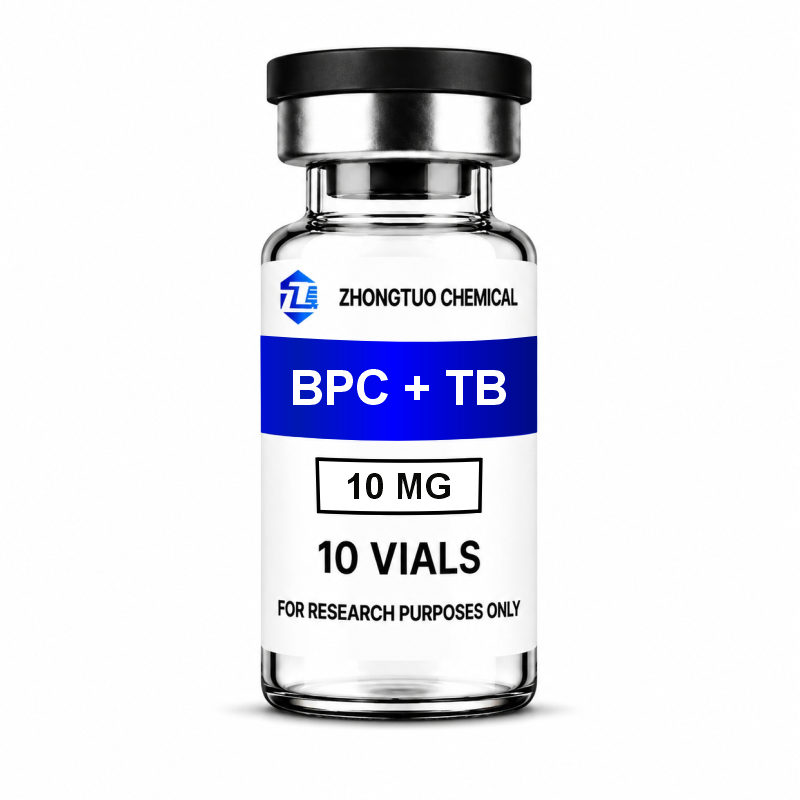
Regenerative biology has evolved from a largely descriptive field into a mechanistically sophisticated discipline. Researchers today are not just asking whether tissues can repair themselves but are investigating precisely which molecular events direct each step of the regenerative process. This level of mechanistic detail requires well-characterized research tools that interact with specific biological pathways.
TB-500 peptide and BPC-157 peptide together represent exactly this kind of focused mechanistic toolkit. Their complementary pathway activities make them valuable individually and potentially more informative together, which is why the combined formulation from Zlzpeptides has attracted scientific interest.
Regenerative Mechanisms at the Molecular Level
Modern regenerative research operates at the interface of cell biology, biochemistry, and pharmacology. Researchers investigate how specific signaling molecules direct cells to migrate, proliferate, differentiate, or change their gene expression in ways that collectively produce repair of damaged tissue.
Understanding these mechanisms requires tools that interact with specific pathways in predictable, well-characterized ways. BPC-157 peptide provides this specificity in the context of mucosal protection and epithelial repair pathway signaling, while tb-500 peptide provides it in the context of cell migration and cytoskeletal remodeling through Thymosin beta4-related mechanisms.
Cell Migration as a Window into Regeneration
Cell migration is one of the most fundamental processes in tissue regeneration and one of the most experimentally tractable. The ability to measure migration rate, directionality, and response to signaling cues in cell culture systems makes migration an ideal experimental endpoint for investigating regenerative pathway activities.
Both BPC and TB compounds influence processes relevant to cell migration, though through different mechanisms. The combined bpc 157 tb 500 blend allows researchers to investigate how these two different routes to migration-relevant signaling interact when both are activated simultaneously.
Angiogenesis and Vascular Remodeling Research
Angiogenesis is another central process in tissue regeneration, and one that is influenced by both BPC and TB pathway activities through different mechanisms. BPC compounds influence angiogenic signaling through pathways related to mucosal repair and growth factor signaling, while TB compounds promote endothelial cell migration that is central to angiogenic sprouting.
Advanced regenerative research that investigates angiogenic remodeling therefore benefits from having both compound types available. The interaction between their different routes to angiogenic signaling modulation is an interesting research question with implications for understanding how regenerative responses coordinate vascular responses to tissue damage.
Tissue Remodeling Pathways and Research Applications
Beyond the initial repair response, tissue remodeling involves the reorganization of repaired tissue into a functional structure that approximates the original architecture. Research into tissue remodeling investigates how extracellular matrix components are deposited, organized, and modified during this process.
BPC and TB compounds may both influence aspects of tissue remodeling, making their combined study informative for researchers investigating how regenerative signaling coordinates long-term tissue organization as well as immediate repair responses.
Connecting Preclinical Research to Scientific Understanding
All research using BPC-157, TB-500, and related compounds is conducted in preclinical and in vitro settings. The goal is to build scientific understanding of regenerative mechanisms that can inform future research directions and potentially guide development of research tools for more applied studies.
Zlzpeptides supports this research mission by providing high-quality, well-documented compounds that meet the needs of serious research programs. Their BB10 combined formulation, along with their individual BPC and TB products, gives researchers the flexibility to design studies that best address their specific scientific questions.
The Research Value of Quality Compounds
The scientific value of regenerative research using BPC and TB compounds depends directly on the quality of the compounds used. Zlzpeptides delivers their BB10 formulation to the same rigorous standards as their entire product line, with sterile lyophilized formulation, batch-specific CoA documentation, and consistent production quality.
This foundation allows researchers to build confident mechanistic conclusions from their experimental data, knowing that the compounds they are working with are accurately characterized and reliably performing.
Conclusion
Advanced regenerative research using TB-500 peptide and BPC-157 peptide represents some of the most mechanistically interesting work in tissue biology today. The combined BB10 formulation from Zlzpeptides makes it practical to investigate the synergistic mechanisms that emerge when both pathway activities are studied together. Quality, documentation, and consistent supply from a trusted provider are the foundations that make this kind of advanced research possible.