


The difference between a clean experiment and contaminated data often starts at the supplier decision. Not after reconstitution. Not at the assay setup stage. Right at the point where someone types a supplier name into Google and picks the top result.
The market for research peptides online has expanded fast. More suppliers means more competition, which in theory should mean better prices and better quality. In practice, it means more variation in what ‘research grade’ actually means from one vendor to the next. Some use independent HPLC testing and publish full COAs. Others print a certificate that looks official but references no external laboratory and no batch-specific data.
If you’re working with a triple agonist compound like retatrutide and your downstream assay depends on precise receptor binding data, the quality of your compound isn’t a secondary concern. It’s the primary variable.
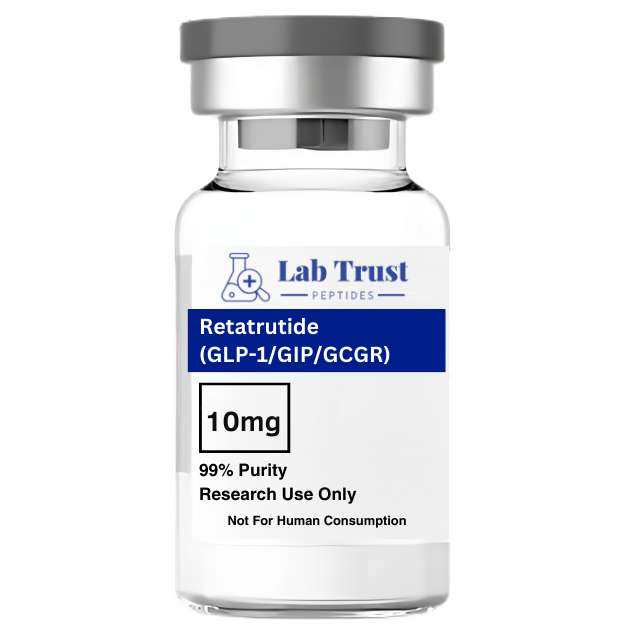
retatrutide 10mg
The Five Checks That Actually Matter
Check 1: Third-Party Certificate of Analysis
Not a manufacturer COA. A third-party COA. The distinction is meaningful because in-house quality testing is inherently subject to the supplier’s incentive to pass their own product. An independent laboratory has no stake in the outcome. The COA should reference a named external testing facility, a specific batch number, a test date, and purity results expressed as a percentage. If the certificate doesn’t show an external lab name, it’s not third-party documentation regardless of what it says at the top.
Check 2: HPLC Purity at 99% or Above
High-performance liquid chromatography is the analytical standard for peptide purity verification. The result appears as a percentage , the proportion of the target compound relative to all detected species in the sample. Research-grade retatrutide 10mg should return 99% or above. Anything lower means related peptide impurities are present in your working compound, which introduces unknown variables into receptor binding affinity data. HPLC alone doesn’t capture heavy metals or biological contaminants, which is why it should appear alongside endotoxin and sterility testing.
Check 3: LCMS Verification
Liquid chromatography-mass spectrometry (LCMS) confirms identity, not just purity. HPLC will tell you that 99% of what’s in the vial is a single compound. LCMS tells you that single compound has the correct molecular mass. For a 26-amino acid synthetic peptide with a molecular weight of approximately 4,756 Da (retatrutide’s approximate molecular mass), a mass spectrum with the expected isotope pattern confirms you have the actual compound and not a structurally related analog. This is more relevant than most suppliers discuss.
Check 4: Cold-Chain Shipping with Tracking
Lyophilized peptides are stable at room temperature for short periods, but shipping time is uncertain. A package that sits in a hot warehouse for three days before moving has been at ambient temperature for three days. Cold-chain shipping with ice packs or dry ice is the appropriate method for maintaining peptide integrity through transit. Check whether the supplier specifies their shipping conditions. Free standard shipping with no temperature control is not cold-chain, regardless of how the listing is worded.
Labs sourcing retatrutide 10mg for metabolic signaling research should confirm that the supplier uses temperature-controlled packaging and provides USPS or equivalent tracked delivery. Batch-matched COA documentation should ship with the product, not be emailed separately after the fact.
Check 5: Sterility and Endotoxin Results
Covered separately in the context of lyophilized peptide quality, but worth repeating here in the sourcing context: a COA without sterility and endotoxin data is incomplete. These aren’t optional tests for research-grade peptides. They’re the difference between a compound you can use in cell-based or in vivo assays with confidence, and one that might introduce inflammatory artifacts into your data.
Red Flags in Online Peptide Listings
Generic COAs that apply to a product category instead of a specific batch are a quality warning. If the certificate says ‘Retatrutide , 99% purity’ with no batch number, no HPLC chromatogram, and no third-party lab reference, that document isn’t verifiable. It’s a placeholder.
Pricing that’s dramatically below market rate is worth questioning. Synthetic peptide manufacturing at research grade involves solid-phase peptide synthesis, HPLC purification, lyophilization, aseptic filling, and quality testing. Those steps have real costs. A retatrutide 10mg vial priced at $30-40 with full COA claims is likely not what it says it is.
That sounds obvious. But most people still make sourcing decisions based on price first and documentation second.
What Good Sourcing Looks Like in Practice
A well-documented research peptide purchase should come with: a batch-specific HPLC report, an LCMS confirmation, a sterility certificate referencing a named external lab, an endotoxin result, storage instructions, and reconstitution guidance. The package should arrive cold-packed. The vial should be sealed glass with a readable label matching the batch number on the COA.
For retatrutide specifically, given its status as an investigational compound with significant research interest and corresponding demand, supplier documentation standards matter more than usual. Demand outpacing quality control is exactly when shortcuts happen.